Sustainable Golf
SUSTAINABLE GOLF PLEDGE
Golf has an important opportunity and responsibility to help address some of the defining environmental and social issues of our time. That is why we are committed to:
- Fostering nature
- Conserving resources
- Strengthening communities
- Taking climate action
We will also strive to use our reach and influence to raise awareness and stimulate wider positive action amongst golfers, fans and the wider public.

Audubon International
Westview has been a proud member of the Audubon International Cooperative Sanctuary Program for Golf (ACSP) since 2015, and completed the recertification process in 2024.
To reach certification, a course must demonstrate that they are maintaining a high degree of environmental quality in a number of areas including: Environmental Planning, Wildlife & Habitat Management, Outreach and Education, Chemical Use Reduction and Safety, Water Conservation, and Water Quality Management.
Westview is one of over 900 courses in the world to hold certification from Audubon International. Golf courses from the United States, Africa, Australia, Central America, Europe, South America, and Southeast Asia have also achieved certification in the program.
By helping people enhance the valuable natural areas and wildlife habitats that golf courses provide, improve efficiency, and minimize potentially harmful impacts of golf course operations, the program serves an important environmental role.

PRACTICES INCLUDE:
- Environmental Planning
- Wildlife & Habitat Management
- Chemical Use Reduction & Safety
- Water Conservation
- Outreach & Education
CURRENT PROGRAMS AT WESTVIEW:
PROJECTS
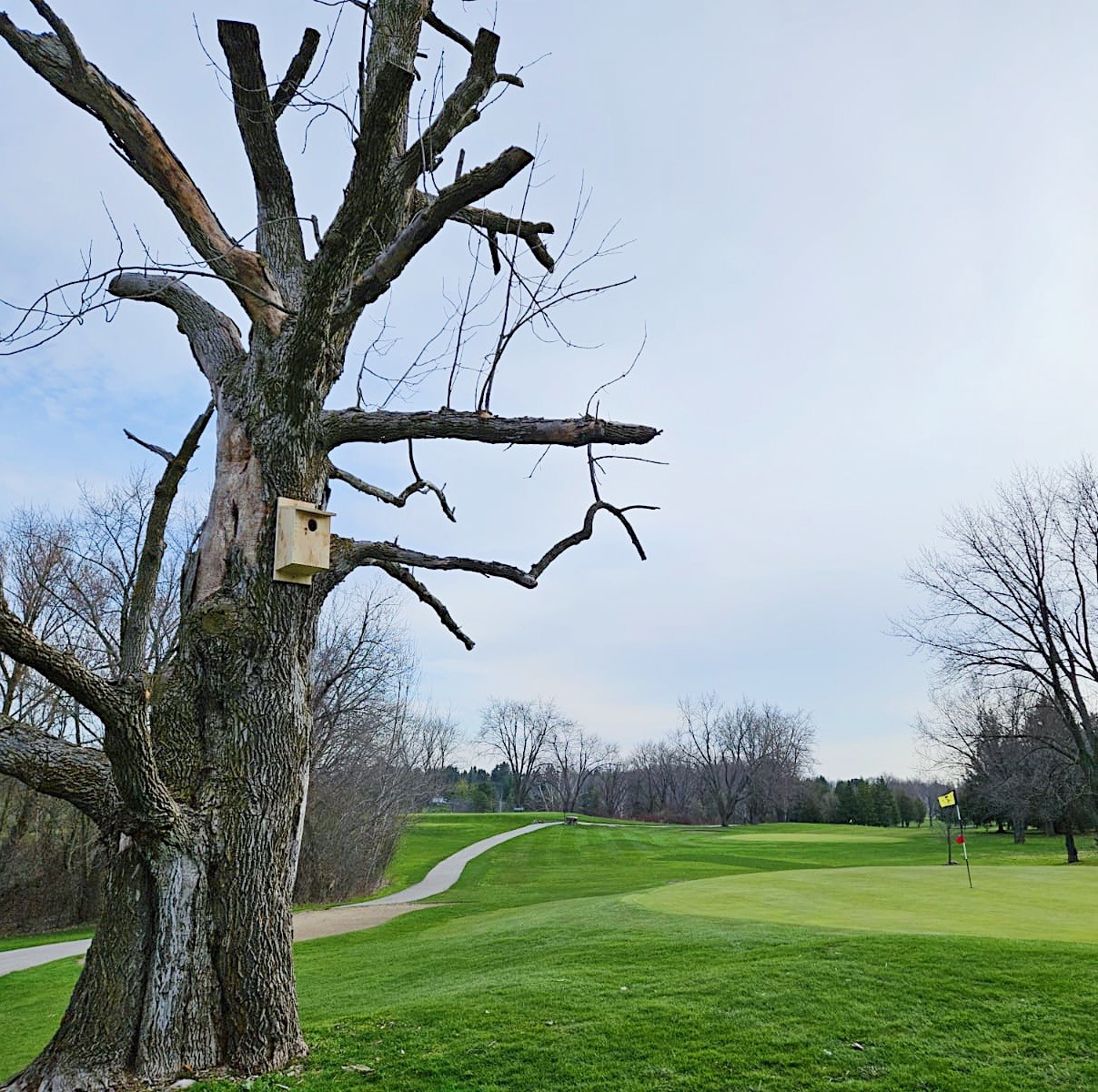
Nesting Boxes for the course were created by our Maintenance Crew using re-purposed wood from the course.
These boxes are located throughout the course to provide nest sites for the American Kestrel, a small falcon with rusty-coloured tail and back with black barring. They are almost exclusively cavity nesters, and lay four to five eggs each year.
As open space becomes increasingly developed, nest sites dwindle, which means Kestrels and other cavity-nesting birds compete heavily for available habitats. These boxes were built with dimensions specific to the kestrel, but can also provide homes for some owl species.
Click here to find out more about the American Kestrel.
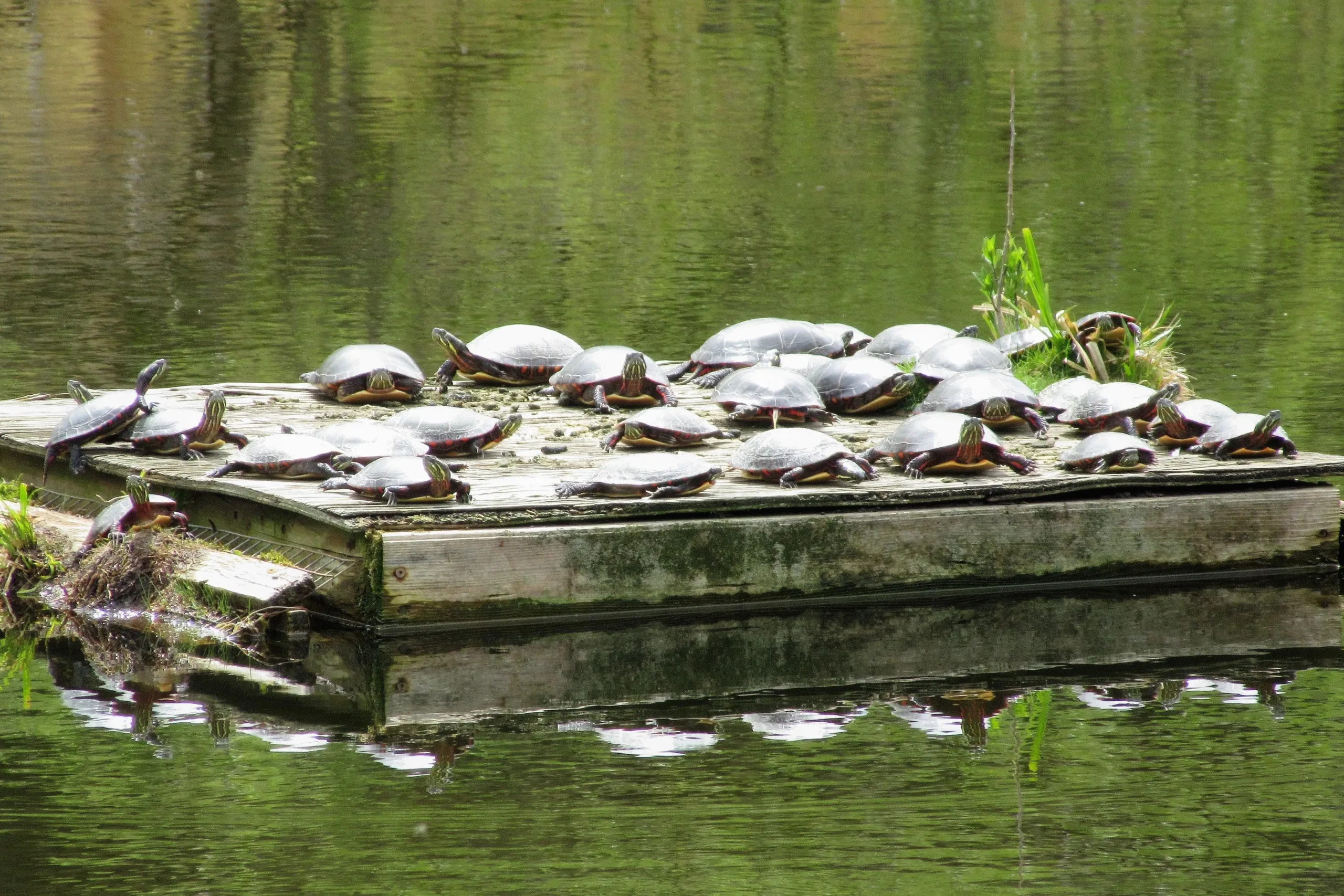
Ontario turtles are semi-aquatic; while they spend a lot of time in the water, they also travel on land a lot too. They are on the move any time from April to October, although the busiest time for them is May and June.
Females travel the most in June, as this is their most important time for laying eggs. They look for appropriate sites to lay their eggs, and often travel large distances to find them. Each species has their own preference and preferred time for laying eggs. Laying eggs involves the female digging a hole (very slowly, in true turtle style!) and depositing the eggs, and then covering them up. There is no parental care of the eggs beyond this, and the hatchlings are on their own to find their way to water. Unfortunately, they don’t always choose the best site…this is why Westview’s turtle nest protectors are put in place, to help increase the survival of turtle eggs, and hatchlings.
Click here to find out more about turtle nests and nest protection.

LOCAL WILDLIFE FAQs
Q: WHAT SHOULD I DO IF I FIND A BABY BIRD THAT HAS FALLEN OUT OF ITS NEST?
A: It is always good to move the bird to a safe spot close by and wait to see if a parent bird is nearby. if you cannot find a safe spot, consider bringing the bird to a local shelter, like Shades of Hope. If the bird is injured, the shelter will help provide rehabilitation and then return it to the area it was originally found. In the case of fledglings, shelters sometimes have other birds from the same species, and would consider releasing them together so they have a flock to be with.
Q: HOW CAN I AVOID DISTURBING LOCAL WILDLIFE HABITATS ON THE GOLF COURSE?
- Be aware of Wildlife Corridors. These exist throughout the three nines of Westview, connecting naturalized areas on the course to neighboring areas (meadows, streams, ponds, and other areas of natural vegetation) to provide safe passage for wildlife.
- Stay clear of naturalized areas. Note signs that indicate where parts of the property have been naturalized. If your ball ends up in one of these sites, take a club length.
- Watch out for turtles. Westview is a popular location for turtle nests. Protective boxes have been built to keep the nests safe until hatching takes place in the fall – if you’re near one of these boxes, be on the lookout for baby turtles nearby!